Sub-Zero Refrigerator Repair
Sub-Zero Serial Number Age: How Old It Is and How Long It Lasts
A Sub-Zero's age comes from the serial tag inside the fresh-food compartment, near the light or behind the top grille on older units, and Sub-Zero owner support can turn that number into a build date. Well-kept units commonly run 20 years or more.
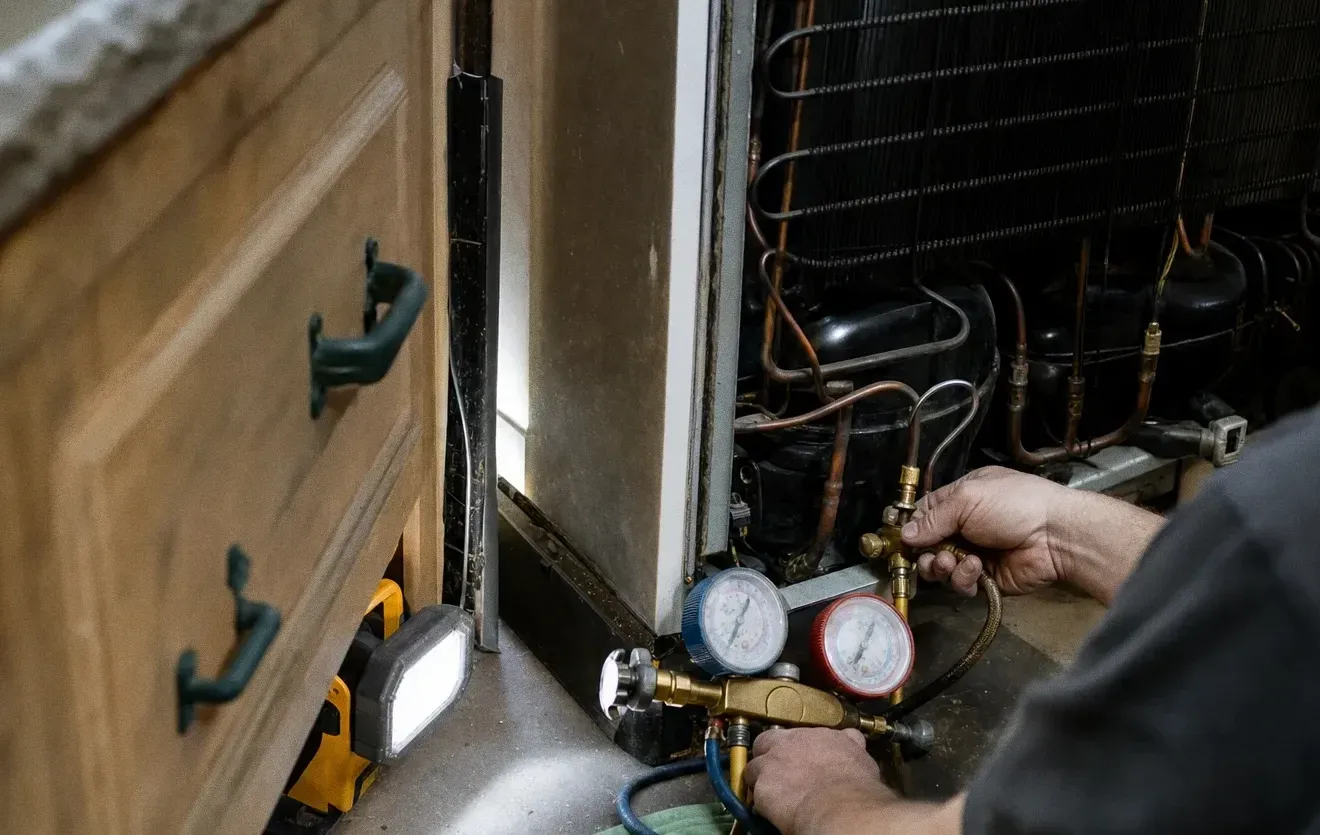
To find out how old a Sub-Zero is, open the fresh-food door and look for the serial tag: a small plate on the ceiling of the compartment near the light, or behind the hinged grille at the top on older built-ins. Copy the model and serial numbers exactly and give them to Sub-Zero’s owner support, or enter them when you register the product, and they can tell you when that unit was built. The digits are not a date you can read off yourself, so treat any online chart that claims otherwise with suspicion.
Age matters because Sub-Zero says it designs and tests its refrigeration to last about 20 years, and a unit at year six calls for a very different decision than one at year twenty-four. If your built-in came with a Cambridge condo or an older house, nobody in the household may know when it went in, and the tag is the only honest answer.
Where to find the serial tag
Sub-Zero puts the rating tag inside the cabinet rather than on the back, because a built-in is boxed into cabinetry and the back is never seen again after installation. On most full-size built-ins, side-by-sides and over-and-under models, look up at the ceiling of the refrigerator section close to the light housing, or along the top edge of a side wall. On older units with a louvered panel above the doors, the tag can sit behind that grille. Switch the unit off at the breaker before you tilt or lift the panel, and keep fingers away from the condenser fan.
Undercounter refrigerators, freezer drawers and wine storage units usually carry the tag on the inside ceiling or on a side wall just inside the door.
Write down both numbers. The model number tells a technician which generation and layout you own, and that decides which parts will fit. The serial number identifies your particular unit and its build date. Take a phone photo of the tag too, since a digit read by the glow of a compartment light is easy to get wrong. If the tag is missing or wiped blank after decades of cleaning, the other clues below still narrow things down.
Other clues when the tag is gone
The serial number is the authoritative source, but a few other details help you double-check it or fill the gap:
- Paperwork. A closing package, a home inspection report or the original appliance invoice often lists the unit, and inspectors frequently photograph the tag.
- The controls. Mechanical dials mark an earlier generation, while a digital touch panel with a temperature readout points to a newer one.
- Labels on parts. The compressor and several electrical components carry their own manufacturing labels. With the grille off, a technician can read them and set the earliest date the unit could have been built.
- Registration. If a previous owner registered the refrigerator with Sub-Zero, that record will show it.
Read parts labels with care. A compressor swapped out during a past repair will be younger than the cabinet around it, so one fresh-looking component does not make the whole appliance new.
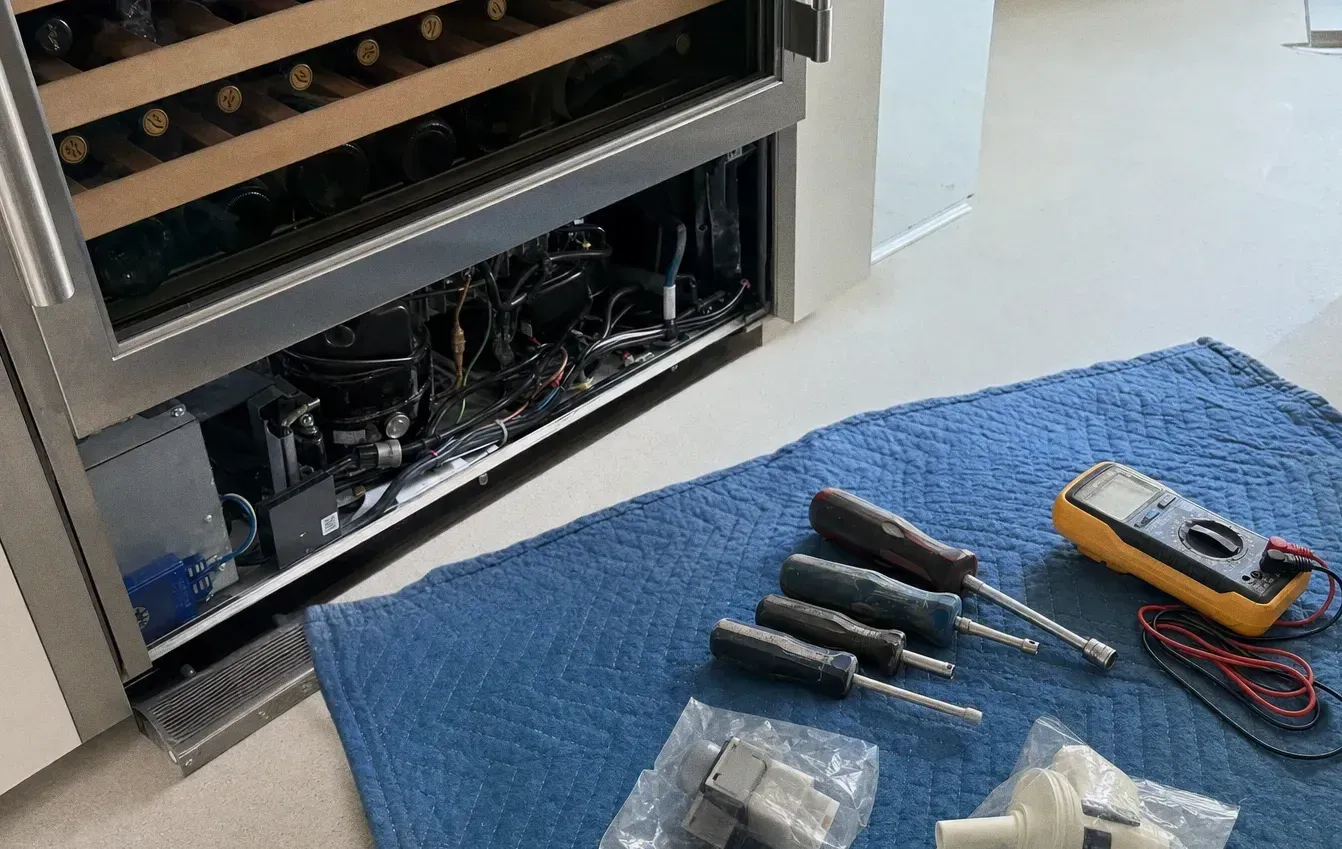
Stuck at the point where it needs a meter?
How long a Sub-Zero lasts, and whether food keeps better
With routine care, a Sub-Zero built-in commonly gives twenty years or more, well beyond the ten to fifteen years people tend to expect from an ordinary freestanding refrigerator. The reasons are mostly mechanical. Many Sub-Zero models use dual refrigeration, where the fresh-food side and the freezer each have their own sealed system, so neither compressor carries the load of the whole box. The condenser sits behind a front or top grille where it can be reached and cleaned, and the heavy cabinets keep doors aligned for years.
Dual refrigeration is also the straight answer to whether a Sub-Zero keeps food fresher. Because freezer air never circulates through the refrigerator, the fresh-food section holds more humidity and does not pick up freezer odors. Lettuce and herbs dry out more slowly, and ice does not taste of whatever sits in the crisper. Tight temperature control helps as well: a compartment that holds within a degree or two of its setting slows spoilage compared with one that swings.
That advantage fades as a unit ages if the seals leak or a fan weakens, which is one more reason to judge condition rather than the calendar alone.
What shortens the life, and what stretches it
Most early failures share one cause: heat the system cannot get rid of. A condenser coated in dust and pet hair makes the compressor run longer and hotter every day, and over the years that wears down the most expensive part in the box. Cleaning the coil with a soft brush and a vacuum about every six months is the single most useful job an owner can do, and more often in a house with a shedding dog or cat.
Other things that wear a unit out early:
- Door gaskets that no longer seal, letting warm, damp air in so the system runs and defrosts more than it should.
- A blocked grille, whether from new trim, a stored tray or a decorative panel that covers the vent.
- An installation beside a heat source or in strong afternoon sun.
- Small faults left alone, such as a squealing fan or a defrost problem that leaves frost on the evaporator, which force the compressor to work around them.
The habits that stretch it are simple. To test the seal, shut a slip of paper in the door at the top, both sides and the bottom, then tug it gently; wherever it comes free without resistance, the gasket has stopped gripping. Change the water filter on schedule so the ice maker valve is not straining. Keep the unit level so the doors swing shut on their own, and leave the vents clear.
Signs that age, not one part, is the problem
A single failed fan or sensor in a fifteen-year-old Sub-Zero is simply a repair. The picture changes when several of these show up together:
- The compressor runs almost without a break even with a clean condenser and good seals.
- Both compartments drift warm, or the freezer cannot reach its setting after the fans and defrost have been checked.
- Oily residue around tubing or a faint hiss, which can point to a refrigerant leak in the sealed system.
- Outer panels that sweat or feel warm, a hint that insulation or internal tubing has broken down.
- Rust on the cabinet floor or around the evaporator.
- Repairs arriving one after another, a board this year and a fan the next.
- Parts for your generation that are getting hard to source.
One sign is a repair to price. Three or four together, in a unit past its second decade, usually mean the whole appliance is nearing the end of its working life.
Repair or replace: the numbers side by side
Age only means something next to cost. These are typical Greater Boston price ranges, and the firm quote comes after diagnosis:
- Door gasket or seal replacement: $270–$810
- Evaporator or condenser fan motor: $300–$630
- Defrost heater, thermostat or sensor: $300–$660
- Electronic control board: $470–$860
- Compressor or sealed-system repair: $980–$2,220
Against those, a comparable built-in refrigerator, appliance only and before installation, typically runs $7,770–$19,780. Even a sealed-system repair is a fraction of that, which is why a sound cabinet at fifteen or eighteen years is often worth fixing. The case for replacement grows when the unit is well past twenty, the sealed system has failed and other parts are wearing at the same time.
A visit starts with a $95 service call that pays for the trip and a complete diagnosis, and if you go ahead with the repair that $95 comes off the bill. We are an independent repair service, and we fit factory-approved parts. For the work itself, see Sub-Zero refrigerator repair or Sub-Zero freezer repair; we cover homes from Porter Square to Kendall Square. Have the model and serial numbers from the tag handy when you call (781) 790-4760, since they help pin down the right parts.
Still asked on the phone
Can I work out a Sub-Zero's age from the serial number myself?
Not reliably. The serial number is not a plain date, and the decoding charts posted online disagree from one generation to the next. Copy the model and serial numbers from the tag inside the fresh-food compartment and give them to Sub-Zero owner support, which can look up the build date for that exact unit.
How long should a Sub-Zero refrigerator last?
Twenty years or more is common with regular care, and Sub-Zero says it designs and tests its refrigeration for about that span. A clogged condenser, tired door seals and small faults left alone are what usually cut that life short.
Is a 20-year-old Sub-Zero worth repairing?
Often it is, as long as the cabinet is sound and the sealed system is healthy. A fan, gasket or control board costs a small share of a new built-in. When the compressor or sealed system fails while other parts are also wearing out, replacement starts to make more sense.
Does a Sub-Zero really keep food fresher?
Yes, mostly because many models use dual refrigeration. The fresh-food section has its own cooling system, so dry freezer air and freezer smells never pass through it, produce holds its moisture longer and the temperature stays steadier.